DianeCulinary
Gluten-Free Sourdough & Artisan Bread Paperback & Kindle

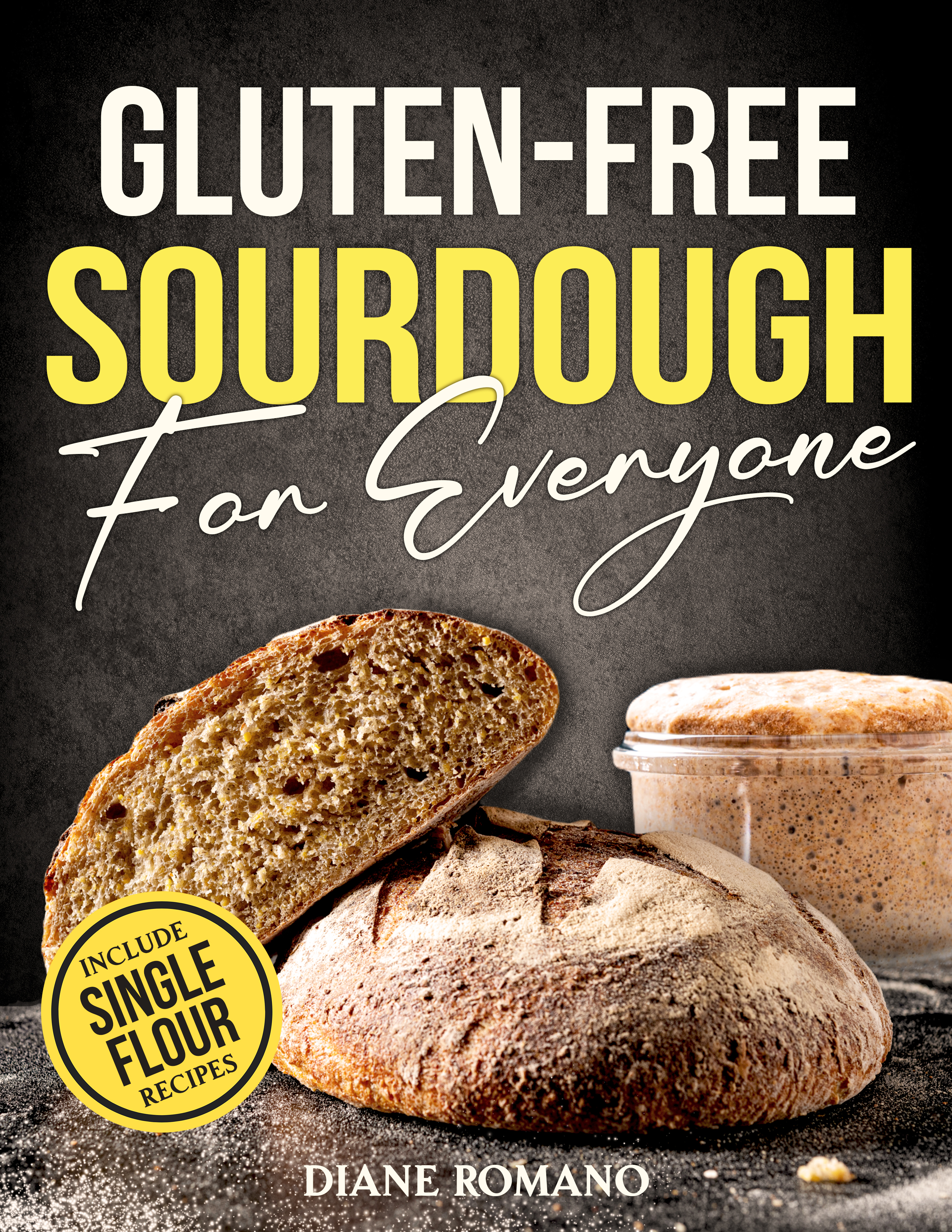
Gluten-Free Sourdough For Everyone: Artisan Bread Without the Guesswork

Finally — a gluten-free sourdough method that actually works.

Buy on Amazon → Available as Paperback & Kindle
Free Bonus Included
Gluten-Free Sourdough Discard Cookbook
Claim Your Free Bonus →
Gluten-Free Sourdough For Everyone cover
Download Directly
⬇ Sourdough Discard Cookbook
Step-by-StepStarter Guide
FoolproofFermentation Method
FreeDiscard Cookbook
AllSkill Levels

Why Gluten-Free Sourdough Is Hard — and How This Book Fixes It


Traditional sourdough relies on gluten — the protein network that traps gas bubbles, creates structure, and gives bread its characteristic chew. Remove gluten from the equation and you lose the scaffolding that holds a sourdough loaf together. Most gluten-free bread books respond to this by adding commercial yeast or extra leavening to compensate. Gluten-Free Sourdough For Everyone takes a completely different approach: it teaches you to work with GF flours on their own terms, building a starter and fermentation process calibrated specifically for gluten-free grain starches rather than trying to mimic wheat.

Building a Gluten-Free Starter From Scratch

The book opens with a comprehensive guide to building and maintaining a gluten-free sourdough starter. You'll learn why brown rice flour is the most reliable base for a GF starter — its natural wild yeast population is robust and consistent — and how to nurture it through the first seven days. The starter guide covers hydration ratios, feeding schedules, ambient temperature effects (a cooler kitchen requires longer fermentation; a warm one speeds things up), signs of a healthy starter versus one that's struggling, and how to revive a neglected starter that's been in the fridge for weeks.

No commercial yeast is required at any point. The entire leavening power comes from your wild culture — which means deeper flavor, better digestion due to long fermentation, and the satisfaction of bread that's genuinely handmade from beginning to end.

The Science of GF Flour Blending

Not all gluten-free flours behave the same way in sourdough, and understanding the differences is what separates good GF bread from great GF bread. Brown rice flour provides structure and a mild flavor but can produce a gummy crumb on its own. Sorghum flour adds an earthy, wheat-like note and improves crumb openness. Tapioca starch creates chew and helps the crust brown and crisp. Potato starch lightens the texture. Oat flour (certified GF) adds softness and a familiar flavor. This book explains the role of each flour and teaches you to blend them for different bread styles — a more open crumb for a rustic boule, a tighter crumb for a sandwich loaf, a layered texture for a batard.

Psyllium husk is the structural backbone of every recipe. It forms a gel when hydrated, creating a network that mimics gluten's gas-trapping ability. The book explains the difference between whole psyllium husk and psyllium husk powder (the powder is more concentrated — recipes specify which to use and why), and why getting this ratio right is the single most important variable in GF sourdough.

Artisan Loaves With Real Crust and Crumb

The artisan bread chapter covers the techniques that produce genuinely impressive loaves: shaping a boule, scoring with a bread lame to control oven spring, baking in a preheated Dutch oven to trap steam and create a crackling crust, and cooling completely before slicing (a step that's especially important with GF bread, where the crumb continues to set as it cools). You'll find recipes for a classic country loaf, a dark rye-style GF bread using buckwheat flour, a seeded multigrain loaf, and a high-hydration open-crumb batard that delivers the airy interior associated with San Francisco sourdough.

Fermentation for Better Digestion

One of the underappreciated benefits of long-fermented sourdough — even the GF variety — is improved digestibility. The extended fermentation process partially breaks down starches and reduces the presence of phytic acid, an antinutrient in grains that can inhibit mineral absorption. For people whose digestive systems are already challenged by celiac disease or NCGS, this matters. The fermentation chapter explains bulk fermentation, cold retarding (an overnight fridge proof that deepens flavor while giving you flexibility on bake timing), and how to read dough for readiness rather than relying rigidly on clock times.

Beyond Bread: Sourdough Pastries and Discard Uses

A healthy sourdough starter produces regular "discard" — the portion removed at each feeding. Rather than waste it, the discard chapter (and the free bonus Discard Cookbook) covers flatbreads, GF sourdough crackers, waffles, pancakes, pizza bases, and even a sourdough chocolate cake that uses the natural acidity of discard to activate baking soda. These recipes are faster than the main bread recipes, require no long fermentation, and are some of the most immediately rewarding things you can make from a GF starter.
Why This Book

  • No commercial yeast — 100% wild-fermented GF sourdough
  • GF flour science explained: which flours do what and why
  • Psyllium husk as the structural key — fully demystified
  • Artisan crust and open crumb without wheat
  • Free Sourdough Discard Cookbook with every purchase

Get the book on Amazon

Buy Now →

Paperback & Kindle available

What's Inside


🌱

Starter From Scratch

Build and maintain a wild GF starter over 7 days — feeding schedules, temperature guidance, troubleshooting included.

🍞

Artisan Loaves

Country boules, batards, sandwich loaves, and dark rye-style breads — real crust, real crumb, no wheat.

⏱️

Fermentation Guide

Bulk fermentation, cold retarding, oven spring — every variable explained so you bake by feel, not by the clock.

🥐

Sourdough Pastries

GF sourdough focaccia, flatbreads, pizza bases, and biscuits — faster recipes using your active starter.

♻️

Discard Recipes

Crackers, waffles, pancakes, and sourdough chocolate cake — smart uses for discard that taste incredible.

🧪

GF Flour Science

Brown rice, sorghum, tapioca, potato starch, oat flour — what each does and how to blend them for any loaf.

Recommended Products


The tools and ingredients that give your GF sourdough the best possible start.

Baking Tool

Banneton Proofing Basket

A banneton gives your GF sourdough boule its shape during the final proof and leaves the classic spiral pattern.

Shop on Amazon →
Baking Tool

Dutch Oven for Bread

A preheated Dutch oven traps steam in the first 20 minutes of baking — the secret to a crackling GF sourdough crust.

Shop on Amazon →
Baking Tool

Bread Lame Scoring Tool

Score your loaf just before baking to control oven spring and give GF sourdough its artisan look.

Shop on Amazon →
Flour

Bob's Red Mill 1-to-1 GF Flour

A reliable GF blend with xanthan gum already included — ideal for the pastry and discard recipes in this book.

Shop on Amazon →
Essential Tool

Digital Kitchen Scale

Sourdough baking is weight-based, not volume-based — a digital scale is non-negotiable for consistent results.

Shop on Amazon →

* Links go to Amazon search results. As an Amazon Associate, Diane Culinary may earn from qualifying purchases.

Free With Your Book

Claim Your Free Sourdough Discard Cookbook

Every purchase of Gluten-Free Sourdough For Everyone includes the Gluten-Free Sourdough Discard Cookbook as a free digital bonus — packed with flatbreads, crackers, waffles, pizza bases, and more. Use the format-specific link below after purchase.

Frequently Asked Questions


Do I need an existing sourdough starter?
No. The book opens with a complete 7-day guide to building a gluten-free sourdough starter from nothing — just brown rice flour and water. By day 7 you'll have an active, bubbly culture ready to leaven your first loaf. No commercial yeast is required at any stage.
How long does gluten-free sourdough take to make?
A basic GF sourdough loaf typically takes 12–24 hours from the moment you mix the dough — including bulk fermentation (4–6 hours at room temperature) and final proof (8–12 hours cold retarded in the fridge overnight). Most of that time is hands-off. Active prep time is under an hour.
Can you really make good sourdough without gluten?
Yes — but the approach is different. GF sourdough uses psyllium husk to create the structural network that gluten normally provides. Combine that with the right flour blend, proper fermentation, and a hot Dutch oven, and the result is a loaf with genuine crust, open crumb, and complex sour flavor that stands on its own merits — not as a substitute, but as a different and excellent kind of bread.
What's in the Sourdough Discard Cookbook?
The free bonus Discard Cookbook covers all the best uses for the starter discard removed during regular feedings: GF sourdough crackers, waffles, pancakes, flatbreads, pizza bases, sourdough muffins, and a sourdough chocolate cake. Each recipe uses discard at different stages of fermentation for different flavor profiles.
Which GF flours work best for sourdough?
Brown rice flour is the best base — it supports a healthy wild yeast culture and produces consistent results. Sorghum flour adds wheat-like flavor. Tapioca starch improves crust browning and chew. Potato starch lightens the crumb. The book provides specific blend ratios for different loaf styles, along with explanations of what each flour contributes.

Ready to Bake Real GF Sourdough?


Get the book that finally makes gluten-free sourdough approachable — with a free Discard Cookbook included.